Table of Contents:
Core Binding Methods: Hardcover, Softcover, Spiral, and Ring Binding Compared
Choosing the right binding method isn't just an aesthetic decision — it directly affects durability, usability, and how your document is perceived by its audience. Whether you're producing a corporate report, academic thesis, or client-facing proposal, each binding type carries specific trade-offs that matter in practice. Understanding these differences upfront saves time, money, and the frustration of reprinting a 200-page document because the binding failed under daily use.
Permanent Binding: Hardcover and Softcover
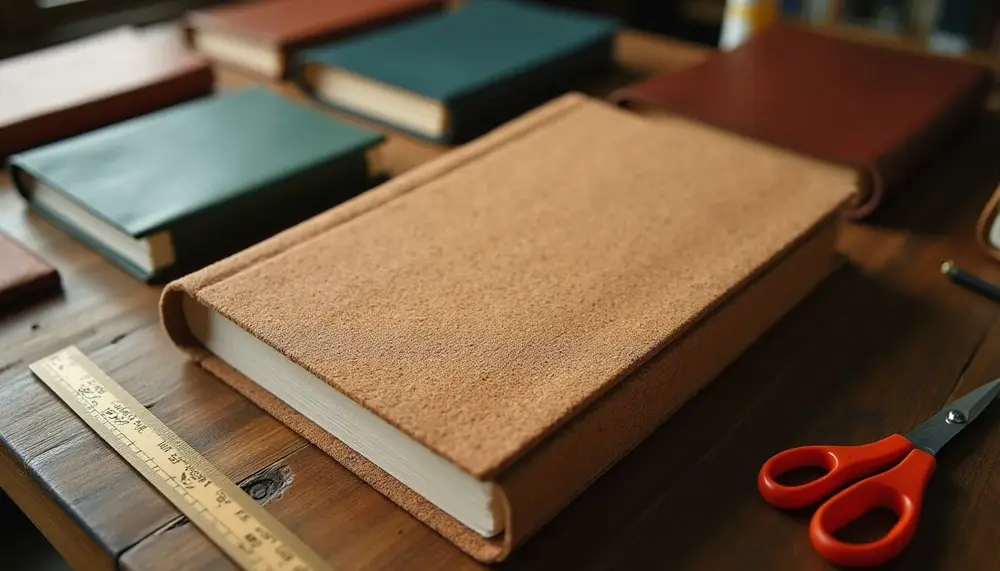
Hardcover binding, also called case binding, uses a rigid board covered in cloth, leather, or coated paper, sewn or glued to the text block. It's the most durable option available — a properly case-bound book withstands decades of handling without spine failure. Production costs typically run 3 to 5 times higher than softcover alternatives, but for documents intended to serve as long-term references or formal academic submissions, that investment is justified. Most university libraries require hardcover for archived thesis copies precisely because of this longevity. If you're navigating the full spectrum of academic submission formats, understanding how different thesis binding types are evaluated by institutions will help you avoid costly missteps.
Softcover binding — perfect binding being the most common variant — uses a flexible cover glued directly to the spine of a collated text block. It's the standard for paperback books, catalogs, and reports under 400 pages. The spine can crack with heavy use when the page count drops below 60–80 pages because the glue surface becomes insufficient. For documents in the 100–300 page range that need a clean, professional look without the cost of hardcover, softcover perfect binding is often the most practical choice. Matching your binding format to document purpose is where most people make avoidable errors.
Mechanical Binding: Spiral and Ring
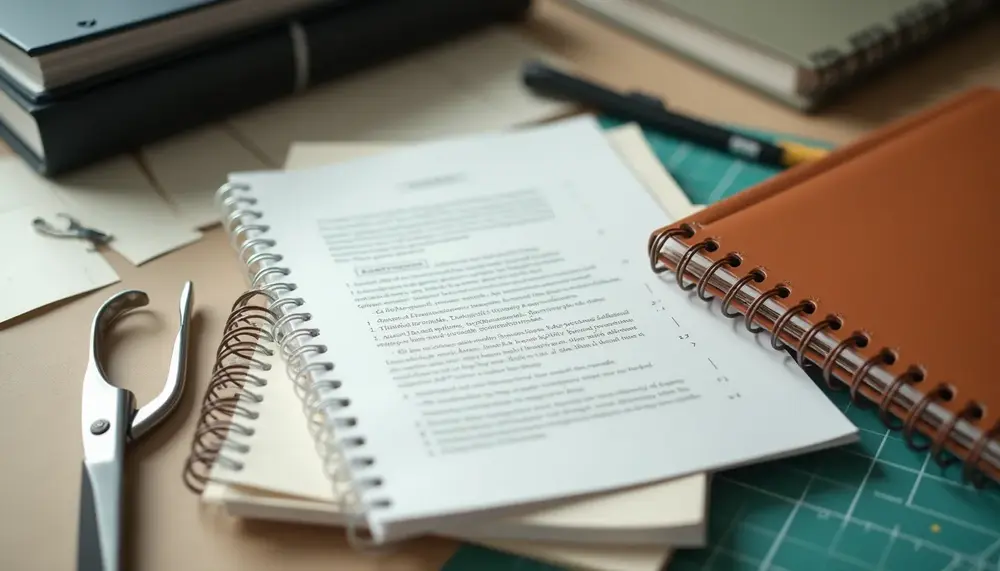
Spiral binding (also called coil binding) feeds a continuous plastic or metal helix through punched holes along the document's spine. The result is a binding that opens completely flat — a genuine functional advantage for workbooks, manuals, and reference documents that need to stay open hands-free on a desk. Coil pitches vary: 4:1 pitch suits documents up to around 120 pages, while 3:1 pitch handles thicker stacks up to 500 pages. The process behind getting spiral binding right involves more precision than most people expect, particularly in hole placement and coil sizing.
Ring binding uses metal or plastic ring mechanisms mounted to a spine board, with pages held on removable rings. The critical distinction from spiral binding is replaceability — pages can be added, removed, or rearranged after binding. This makes ring binding the default choice for training manuals, price lists, and regulatory compliance documents that require regular updates. Standard ring diameters run from 0.5 inches (holding roughly 100 sheets) up to 3 inches or more. For academic documents specifically, how ring binding applies to thesis submissions differs significantly from commercial use cases.
- Hardcover: Maximum durability, archival quality, highest cost
- Softcover (perfect binding): Clean finish, cost-effective for mid-length documents
- Spiral/coil binding: Flat-open functionality, fixed page order
- Ring binding: Updateable content, modular page management
Each method serves a distinct use case. The mistake most buyers make is defaulting to whichever option looks professional without considering how the document will actually be used day-to-day — whether it needs to lie flat, survive heavy handling, or accept future page additions.
Selecting the Right Binding Board: Chipboard, Greyboard, and Archival-Grade Options
The board you select for a hardcover binding does more than hold pages together — it defines the structural integrity, the tactile quality, and the longevity of the finished volume. Most binders work with three primary board categories, each with a distinct density range, compression tolerance, and suitability for different end uses. Getting this choice wrong means warped covers, poor spine alignment, or a book that physically degrades within a decade.
Chipboard, Greyboard, and the Density Question
Chipboard is the entry-level option: a recycled-fibre board typically available in thicknesses from 1.5 mm to 3 mm, with a density around 800–900 kg/m³. It's cost-effective and adequate for short-run commercial work, promotional hardcovers, or items not intended for long-term preservation. The problem is its acid content — chipboard is not acid-neutral, and over time it will yellow, become brittle, and transfer degradation to adjacent paper. For anything meant to last more than 10–15 years under normal conditions, chipboard is a compromise.
Greyboard (also called bookbinding board or binder's board) is the professional standard. With densities typically between 1,000 and 1,200 kg/m³ and thicknesses commonly ranging from 1.5 mm to 4 mm, it resists warping far better than chipboard when exposed to humidity fluctuations. The higher density means it cuts cleanly, squares reliably, and takes adhesive without significant compression. For a standard hardcover thesis, dissertation, or quality edition, 2.5 mm greyboard is the most commonly specified thickness — heavy enough to feel substantial, light enough not to overpower the text block.
When matching board weight to the demands of academic binding, the caliper of your text block matters significantly. A 300-page thesis printed on 90 gsm paper typically pairs well with 2.5–3 mm board; anything thinner risks a visually disproportionate cover. Thicker blocks, say 500+ pages, benefit from 3.5 mm board to maintain visual balance and prevent the covers from bowing outward under paper tension.
Archival-Grade Boards: When Permanence Is Non-Negotiable
Archival-grade boards — often referred to as conservation board or museum board — are manufactured to ISO 9706 or ANSI/NISO Z39.48 standards. They are acid-free, alkaline-buffered (typically with a pH of 8.0–9.5), and lignin-free. This matters enormously for documents intended to remain intact over 50–100+ years. Libraries, archives, and institutions depositing legal or research copies increasingly specify archival board as a minimum requirement. The cost premium over standard greyboard is typically 30–60%, but for irreplaceable documents it's not optional — it's the baseline.
For a detailed breakdown of how board selection integrates with cover materials, adhesives, and paper specification, the full picture of thesis binding materials reveals how these components interact under real-world stress conditions. A mismatch between a high-moisture adhesive and a low-density board, for instance, is one of the most common causes of cover warp within the first year.
One practical checkpoint: always verify whether the binding board you source is machine-direction consistent. Boards cut against their grain direction will warp under even moderate humidity. Reputable suppliers mark grain direction on packaging — if yours doesn't, it's worth testing a sample before committing to a full job. Format decisions in thesis binding frequently hinge on exactly this kind of material-level precision, where a single variable can determine whether the finished piece lies flat or curls at the corners within weeks.
Comparison of Different Binding Methods and Their Attributes
| Binding Method | Durability | Cost | Page Capacity | Aesthetic Finish | Best Use Case |
|---|---|---|---|---|---|
| Hardcover | Very High | Very Expensive | Unlimited | Elegant and Professional | Long-term references and academic submissions |
| Softcover (Perfect Binding) | Moderate | Moderate | Up to 400 | Sleek and Modern | Reports and catalogs |
| Spiral Binding | High | Low to Moderate | Up to 500 | Functional | Workbooks and manuals |
| Ring Binding | Moderate | Low | Up to 350 | Flexible | Training manuals and price lists |
Binding Materials in Depth: Buckram, Imitation Leather, and Cloth Covers
The cover material you choose does more than protect your thesis — it communicates permanence, care, and academic seriousness. Most university binding specifications explicitly name buckram as the preferred or required material, and there are sound structural reasons for this. Understanding what separates buckram from imitation leather and standard cloth helps you make an informed decision rather than defaulting to whatever a print shop happens to stock.
Buckram: The Industry Standard for Hardback Thesis Binding
Buckram is a starch- or pyroxylin-impregnated woven fabric, typically cotton-based, that has been used in library and archival binding for over a century. The impregnation process fills the weave, creating a surface that resists moisture, dirt, and everyday handling without cracking or delaminating over decades. A properly bound buckram thesis can realistically last 50–100 years in library storage conditions — a claim that cannot be made for cheaper alternatives. The texture is distinctive: a fine, tight weave with a subtle grain that accepts gold foil blocking with exceptional clarity, which matters when your name and title need to be legible on a shelf spine.
When evaluating suppliers, ask specifically whether they use pyroxylin-coated buckram or acrylic-coated variants. Pyroxylin-coated buckram offers superior resistance to humidity and is the preferred choice for institutional repositories. Most professional binders work with grades like Skivertex or Brillianta — established buckram lines with consistent weight (typically 180–220 gsm for the cloth component) and colour stability. If you're uncertain how different grades compare in practice, requesting physical binding samples before committing is the single most effective way to assess quality firsthand.
Imitation Leather and Cloth: When They Work and When They Don't
Imitation leather (often PU-coated or vinyl-coated fabric) presents a smooth, slightly glossy surface that appeals visually but performs poorly over time. The coating tends to crack along the spine hinge after repeated opening, particularly in low-humidity environments. For a dissertation that will be handled regularly by academic staff or stored in a university library, this degradation becomes visible within 5–10 years — a significant concern if your institution retains physical copies. Imitation leather is better suited to personal keepsake copies where display value outweighs longevity.
Plain cloth covers without impregnation represent the budget tier of hardback binding. They accept foil blocking adequately but are vulnerable to staining and moisture absorption. Where institutions do not mandate buckram specifically, cloth may pass visual inspection but will show wear considerably faster. The decision between these materials involves more variables than most candidates realise — from archival requirements to aesthetic preference — and a detailed breakdown of the full decision framework is available in this guide covering thesis binding material selection.
Colour availability also varies significantly by material. Buckram suppliers typically offer 15–30 standard colours across their product lines, while imitation leather ranges tend to cluster around 8–12 options. If your department has a house colour or you want to coordinate with institutional branding, you'll find buckram's range considerably broader. For a practical overview of which shades are most commonly requested and what they signal in academic contexts, the breakdown of popular thesis binding colour choices covers both aesthetic and convention-based considerations.
- Pyroxylin-coated buckram — archival standard, recommended for all institutional copies
- Acrylic-coated buckram — acceptable quality, widely available, slightly lower moisture resistance
- Imitation leather — visually appealing short-term, prone to hinge cracking; suitable for personal copies only
- Plain cloth — budget option, limited durability, best avoided for library submissions
Color Strategy in Academic Binding: Psychology, Discipline Conventions, and Institutional Rules
Color selection in thesis binding is rarely treated with the strategic weight it deserves. Most candidates make this decision in the final 48 hours before submission, defaulting to black or navy because it feels "safe." That approach ignores a well-documented body of research on color perception in professional contexts — and misses a genuine opportunity to shape how examiners, library archivists, and future researchers perceive your work before reading a single word.
What Color Communicates Before the Cover Opens
Color psychology in academic contexts operates differently than in consumer marketing. Examiners aren't making purchasing decisions, but they are forming rapid unconscious impressions about professionalism, subject fit, and candidate confidence. Dark blues and burgundies consistently signal authority and methodological rigor — a reason why law and philosophy departments default heavily to these tones. Greens, particularly forest or bottle green, have become strongly associated with environmental sciences, ecology, and sustainability studies, to the point where a green binding in those disciplines reads as disciplinary fluency rather than personal preference. Before committing to any shade, it's worth reading our detailed breakdown of how binding color influences examiner perception and shelf presence across different submission contexts.
Red occupies a uniquely polarizing position. In roughly 30% of UK university binding guidelines I've reviewed, red is either explicitly discouraged or described as "attention-seeking." Yet in creative disciplines, humanities, and certain social science programs, a well-chosen red signals intellectual confidence and stands out meaningfully in library collections. The case for red as a deliberate academic choice is stronger than most candidates realize — provided it aligns with your institutional culture and subject matter.
Institutional Rules: The Non-Negotiables
Before any color strategy discussion becomes relevant, candidates must verify binding color requirements with their graduate school directly. Roughly 40% of Russell Group universities maintain explicit binding color specifications, particularly for doctoral theses entering institutional repositories. Oxford traditionally mandates dark blue for DPhil submissions. Edinburgh specifies specific PMS color ranges for faculty-designated covers. Deviating from these requirements — regardless of aesthetic rationale — risks formal rejection at submission. Always obtain written confirmation from your graduate office, not verbal assurance from department administrators.
For candidates at institutions with open color policies, the decision tree should run in this order: first, check whether your department has an informal convention strong enough to constitute an expectation; second, consider your discipline's visual culture; third, assess your personal statement goals. Non-traditional choices like pink as a deliberate thesis binding choice work effectively in design, gender studies, and arts-based research contexts, but require stronger justification in STEM submissions where such choices may read as miscalibrated rather than confident.
For candidates still navigating the full spectrum of available options, a structured overview of the most commonly selected thesis binding shades — with notes on discipline fit and availability across binding services — provides a practical starting framework. The core principle remains consistent: color is never neutral in a formal academic submission, which means the absence of a deliberate strategy is itself a choice, and usually an underperforming one.
Evaluating Binding Samples Before Committing: Quality Indicators and Testing Criteria
Requesting and rigorously testing binding samples before placing a final order is one of the most underutilized steps in the thesis preparation process. Most print shops and binderies will provide samples on request — yet the majority of students never ask for them. This is a mistake that can cost you both money and time, particularly when institutional submission deadlines allow zero margin for error. A hands-on evaluation of a physical sample takes roughly 20 minutes but can reveal deficiencies that no product photo or website description ever would.
Physical Stress Tests Every Sample Should Pass
Start with the spine. Open the bound sample to the middle page and lay it flat on a table without holding it open. A quality binding should hold the pages at roughly a 90-degree angle without the spine cracking, splitting, or the pages springing shut. Repeat this test at the first and last 10% of the document — these zones receive the greatest mechanical stress during daily use and are where inferior bindings fail first. Hardcover case bindings should withstand this test effortlessly; perfect-bound paperback alternatives often show stress lines after just 10–15 open-and-close cycles.
Next, perform a page-pull test. Grip a single leaf near its binding edge and apply steady lateral pressure — not enough to tear the paper, but firm enough to simulate years of normal handling. Pages should resist separation completely. If any give is detectable at the adhesive line in a perfect binding, or if the thread feels loose in a sewn section, reject that sample outright. For hardcovers, check the hinge points where the cover meets the textblock: these joints should flex without any audible cracking and should return to alignment without visible warping.
Visual and Material Quality Indicators
Examine the covering material under natural light and at an oblique angle. Cloth-covered boards should show a consistent weave with no adhesive bleed-through, no bubbling, and no areas where the fabric sits loosely over the board. Before selecting your cover substrate, it's worth understanding how different covering materials perform under prolonged handling and varying humidity conditions, since this directly affects long-term appearance. The corners of a sample are particularly revealing: hand-turned corners should be tight and symmetrical, with no exposed board edges or overlapping material bunching.
Board rigidity matters more than most people expect. Flex the covers of a hardbound sample front to back. Under-weight board — anything below 2.5mm for a standard A4 thesis — will warp noticeably when exposed to fluctuating room humidity over months or years. When assessing this, the guidance on selecting appropriate board thickness and density provides a solid technical baseline for what your sample should actually feel like in hand.
Print quality on the spine and cover requires specific scrutiny. Foil blocking should be sharp-edged with no halation (a blurring glow around letter edges), consistent metallic reflectivity, and zero peeling at letter corners. Printed covers should show no visible banding, color inconsistency, or laminate lifting at trimmed edges. When working through this evaluation process systematically, cross-referencing your findings against documented real-world sample comparisons helps calibrate your expectations against what's actually achievable at different price points.
- Spine flexibility: No cracking under a 180-degree flat-open test
- Page adhesion: Zero movement under firm lateral page-pull pressure
- Board weight: Minimum 2.5mm for A4 hardcover, 3mm for larger formats
- Foil/print registration: Sharp edges, consistent color, no laminate lifting
- Corner construction: Tight, symmetrical, no exposed board substrate
Document your evaluation in writing and, where possible, photograph any deficiencies before returning samples. This creates a clear paper trail when negotiating corrections with a bindery and ensures your final order is held to the exact standard you've approved rather than an assumed one.
Sourcing and Supplier Decisions: Local Binderies, Online Services, and Regional Considerations
Choosing where to get your thesis bound is a decision that affects turnaround time, quality consistency, and your ability to catch errors before the final submission. The market has split into two distinct channels — local trade binderies and online print-and-bind services — and each carries real trade-offs that matter when deadlines are firm and university regulations are non-negotiable.
Local Binderies: Control, Communication, and Inspection Opportunities
Working with a local bindery gives you something no online service can replicate: the ability to physically inspect a sample before committing to the full run. Many universities in Ireland and the UK still require hardcover submissions, and regional suppliers understand these institutional standards intimately. If you're researching what binding providers in Cork actually offer, you'll find that local suppliers often accommodate same-day consultations and can advise on board thickness, endpaper selection, and spine lettering in a single appointment.
Turnaround times at local binderies typically range from 24 to 72 hours for standard hardcover work, though peak submission periods — typically April–May and September–October — can stretch that to five to seven working days. Build that buffer into your timeline. Local suppliers also allow you to supply your own paper stock, which matters if your methodology chapter contains high-resolution figures that require 100gsm or heavier paper to prevent ink bleed-through.
Online Services: Scalability, Price Transparency, and the Proof Problem
Online binding platforms have improved substantially over the past decade. Services like Print2Demand, Mixam, and university-affiliated print portals offer competitive pricing — hardcover thesis binding online typically runs between €25 and €55 per copy depending on page count and cover specification. The cost advantage is real, but the workflow introduces a variable that catches many students off guard: you cannot physically proof the bound copy before dispatch. A misaligned spine stamp or an incorrect foil colour discovered on delivery day is a serious problem if your submission window closes in 48 hours.
Before placing an online order, request a digital proof of the cover layout and confirm spine width calculations with the supplier. Spine width depends on page count and paper weight — a 300-page thesis on 90gsm stock will have a materially different spine than the same page count on 80gsm. Most online services calculate this automatically, but verifying it prevents the single most common error in remote binding orders. When comparing methods, it's also worth reviewing the full spectrum of binding structures available to ensure the method you've chosen is actually appropriate for archival submission versus working copies.
Regional considerations extend beyond geography into institutional compliance. Some universities specify minimum board weights for hardcover submissions (typically 2.5mm to 3mm greyboard), cloth or buckram cover materials, and gilt or foil lettering in a prescribed format. Online services don't always make these distinctions clear in their product configurators. A supplier unfamiliar with Irish or British academic binding conventions may default to a decorative hardcover that looks professional but fails to meet library archival standards.
The most reliable approach, particularly for first-time submissions, is to evaluate physical binding samples before finalising your supplier. Whether you source those samples locally or request them by post from an online provider, touching the finished product tells you things that product photography cannot — how the cover boards flex under pressure, whether the spine lettering is recessed or surface-applied, and how the text block sits relative to the case. These details determine whether a bound thesis looks like the document of record it is meant to be.
Beyond Academic Theses: Zine Binding Techniques and Independent Publishing Applications
Binding isn't just for university submissions and corporate reports. The independent publishing scene — zines, artist books, chapbooks, limited-edition runs — operates by its own logic entirely, where the binding method itself becomes part of the editorial statement. A punk zine stapled with exposed metallic hardware reads completely differently than a hand-sewn pamphlet with waxed linen thread, even if the content is identical. Understanding this spectrum gives you creative and practical leverage that most print-on-demand services will never offer.
Saddle Stitch and Pamphlet Binding: The Zine Workhorses
Saddle stitch binding — two or three staples through the spine fold — remains the dominant technique for zines under 64 pages. It's fast, requires minimal equipment (a long-arm stapler handles up to A3 folded), and lies completely flat when open. The limitation is page count: beyond 80 pages, the spine starts to "rainbow," meaning pages shift outward and the staples strain. For anyone serious about producing consistent zine runs, learning the pamphlet stitch as a hand-sewn alternative unlocks better durability and a distinctly tactile quality. Three holes, a single length of waxed thread, and a bone folder — that's the entire toolkit. If you want to push the craft further, the resource on building genuinely distinctive zine formats covers everything from accordion folds to coptic stitch variations that are rarely discussed in mainstream bookbinding guides.
Perfect binding for zines is increasingly accessible through desktop hot glue systems starting around €150, allowing independent publishers to produce trade-quality paperbacks in runs as small as 10 copies. The minimum spine width for legible text is roughly 3mm, which means you need at least 60–70 pages of 80gsm stock to make it work structurally.
Mechanical Binding in Non-Academic Contexts
Spiral and comb binding carry an unfair reputation as purely institutional formats, but independent cookbook authors, illustrators producing reference sheets, and workshop facilitators actively prefer them for functional reasons. A spiral-bound lookbook lies flat on a studio table; a perfect-bound one doesn't. The technical process behind clean spiral binding applies equally to a 200-page thesis and a 30-page self-published field guide — the margin tolerances and hole-punch alignment requirements are identical regardless of content type.
Ring binding deserves special mention for modular publishing — portfolios, recipe collections, and instructional manuals where pages get swapped, updated, or redistributed. The structural principles that make ring binding a reliable choice for academic documents translate directly into professional presentation contexts, particularly when the reader needs to extract or rearrange sections. Standard two-ring binders hold up to 350 sheets of 80gsm; a D-ring mechanism handles 25% more than a standard O-ring at the same stated capacity.
- Risograph zines: typically saddle-stitched, since the paper stock (60–90gsm uncoated) doesn't adhere well to hot glue perfect binding
- Artist books in editions under 50: hand-sewn Coptic or long stitch allows exposed-spine aesthetics without any adhesive
- Workshop handouts and manuals: coil binding in 3:1 pitch (three holes per inch) handles thinner documents more cleanly than 2:1 pitch
- Chapbooks under 24 pages: single-sheet folded and trimmed, no binding hardware needed at all
The practical takeaway for independent publishers is to match binding method to use behavior, not just aesthetics or budget. A zine that gets read once can be saddle-stitched. A reference tool that gets handled daily needs mechanical binding or a sewn text block. Getting that decision right from the start saves reprinting costs and, more importantly, keeps the physical object functional for as long as the content remains relevant.
Durability, Longevity, and Archival Standards: What Binding Choices Mean for Document Preservation
Binding is not merely an aesthetic decision — it is a preservation commitment. A document bound today may need to remain intact and legible in 50, 100, or even 200 years. Libraries, universities, and archival institutions operate under strict standards precisely because binding failures are irreversible: once adhesive degrades, spine cloth tears, or acidic boards contaminate pages, the damage cannot be undone. Understanding the material science behind binding longevity separates a document that survives from one that crumbles.
The Chemistry of Binding Longevity
The single greatest threat to bound documents is acid migration. Standard cardboard and many commercial adhesives contain lignin and acidic compounds that, over decades, transfer into paper and cause yellowing, brittleness, and structural breakdown. Archival-grade materials — defined by ISO 9706 and ANSI/NISO Z39.48 — must maintain a pH of 7.5 or above, use alkaline-buffered boards, and employ adhesives with long-term stability under variable humidity and temperature conditions. A hardcover case binding using acid-free binder's board, Japanese tissue reinforcement, and PVA-methyl cellulose adhesive blends can realistically achieve a lifespan exceeding 200 years under controlled storage. When you're selecting the structural foundation of a long-term document, understanding what distinguishes archival binder's board from standard grey board is foundational knowledge, not optional detail.
Thread-sewn bindings consistently outperform adhesive-only bindings in longevity testing. Perfect binding — common in commercial paperbacks — begins delaminating within 10–30 years under regular use because PUR and EVA hotmelts harden and embrittle with thermal cycling. By contrast, Smyth-sewn sections distribute stress mechanically across thread rather than adhesive film, and documented examples from 16th-century European bookbinding demonstrate that sewn structures survive centuries when the thread and paper remain chemically stable. For any document intended for permanent retention, thread sewing is not a premium option — it is the baseline requirement.
Matching Binding Type to Preservation Intent
Not every document requires archival-grade treatment, but the decision should be deliberate. University theses, legal records, heritage publications, and institutional reports destined for library deposit warrant full archival specification. Working documents, reference copies, and short-cycle materials can reasonably use semi-permanent bindings such as section-sewn softcovers or burst-bound paperbacks without significant loss. The full spectrum of material options for academic submissions makes clear that the gap in cost between standard and archival materials is often under 15–20%, while the gap in longevity can be measured in decades.
Environmental factors interact critically with binding choices. Documents stored in environments exceeding 65% relative humidity will experience accelerated adhesive failure and mold growth regardless of binding quality. Polyester film encapsulation of individual pages combined with clamshell box enclosures extends the effective life of even moderately bound documents. Institutions following BS 4971:2017 guidelines recommend climate-controlled storage at 16–19°C and 45–55% RH as the first line of preservation defense.
When planning a binding project with long-term relevance, the sequence of decisions matters: material selection precedes structural choice, which precedes finishing. Examining the structural distinctions between binding types helps clarify which constructions physically support archival-grade materials — because not every cover style accommodates alkaline boards or sewn textblocks. Similarly, institutional submission requirements often dictate minimum specifications for format, spine width, and cover treatment that must align with your preservation goals from the outset. Getting these decisions right at the planning stage is the only practical approach — retroactive rebinding is costly, and for unique documents, it carries real risk of further damage.
Frequently Asked Questions about Binding Options
What are the main types of binding methods available?
The main types of binding methods include hardcover, softcover (perfect binding), spiral binding, and ring binding, each serving different needs in terms of durability and usability.
How does spiral binding differ from ring binding?
Spiral binding allows the document to lay flat by using a continuous plastic or metal coil, while ring binding uses metal or plastic rings, allowing pages to be added or rearranged easily.
What is the benefit of hardcover binding?
Hardcover binding is the most durable option, providing maximum protection and longevity, making it ideal for documents that require long-term preservation.
What is perfect binding and when is it best used?
Perfect binding is a type of softcover binding that uses glue to attach the pages to the spine. It's best used for documents up to 400 pages that require a professional appearance without the cost of hardcover binding.
What should one consider when choosing binding materials?
Choosing binding materials involves considering factors such as durability, cost, required aesthetics, and whether the document will be handled frequently or needs to last for years.